
Paver sealing for San Marco homes
Paver Sealing in San Marco, FL
San Marco's riverfront yards and old oaks ask a lot of pavers, so call (904) 966-4279 for a free sealing estimate.
- Brings out deeper paver color
- Fresh joint sand helps lock pavers in place
- Gives weeds less room to grow
- Makes the surface easier to keep clean
- Free estimate, no obligation
Request a Free Estimate
Free, no obligation.
Fast, careful paver sealing in San Marco
Homeowners who want paver sealing in San Marco can ask for a free estimate and will hear back within 1 business day, usually much sooner. The contractor washes the pavers, refills the joints with sand and seals the surface. That covers a courtyard off San Marco Square as easily as a drive near the river, so book your free estimate.
Picture a brick walkway gone green between the joints after a wet summer, with a line of grit along the low side. After a wash, fresh sand and a new coat, it reads as one warm tone again. If you would rather talk first, call (904) 966-4279 and tell the contractor which side of the Square you live on.
Why hire a local paver sealing contractor in San Marco?
San Marco has river water, old oaks and a lot of brick, and all three change how a sealing job is done. A local contractor plans for that from the first visit, so to hear how it applies to your pavers, book your free estimate.
A free walk-through
The contractor looks at your San Marco pavers in person and quotes before any work starts. You owe nothing for the visit.
A range to hold bids against
San Marco bids can be checked against the $1.75 to $3.25 per square foot that companies here publish for a full clean, sand and seal.
A finish that suits old brick
Brick and clay pavers can call for a breathable sealer. The contractor explains your options before you pick a look.
No pressure to book
Ask your questions, take the quote home and decide when it suits you. Replies come within 1 business day, usually much sooner.
Get Your Free Estimate in San Marco
Tell us about your pavers in San Marco.
Free, no obligation
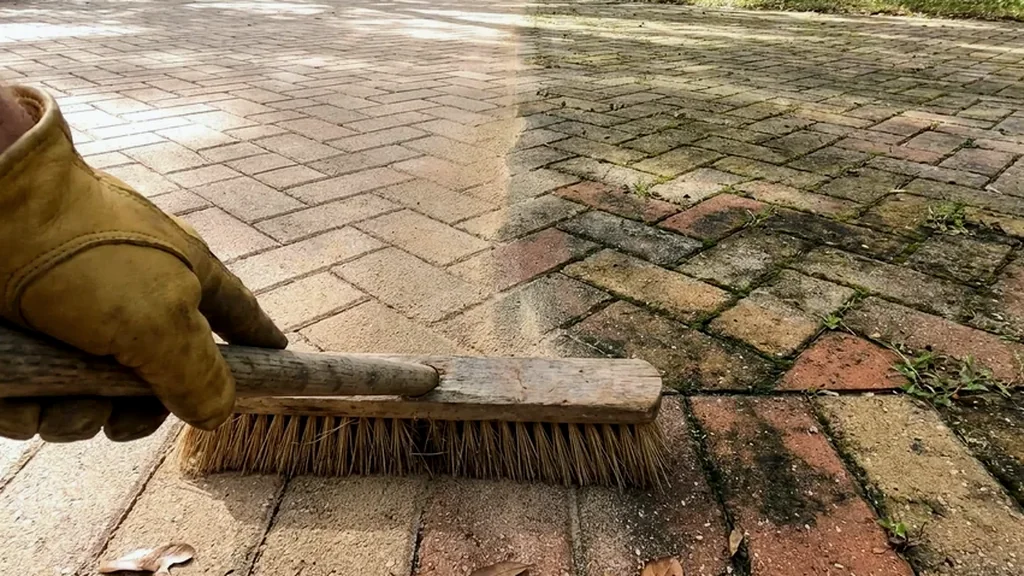
What paver problems show up most in San Marco?
Silt left by river high water
The St. Johns rose to 5.57 feet on the morning of September 11, 2017, at high tide, and homes in San Marco flooded. A River Road home showed a high-water mark of about 5 feet after Irma. Pavers that sat under river water can keep a gray film of silt, and low corners of a patio hold it longest. Sealer would lock that film in, which means a thorough wash has to come first. The contractor will ask whether your yard took water in 2017 or after later storms, and where.
Water that stays after the storm
A San Marco resident told News4JAX in 2025 that the road was about knee deep at its worst, and that wakes push water into yards at high tide. The city finished the LaSalle Street pump station in October 2026, but heavy rain can still leave puddles. Sealer needs a dry surface, so a wet yard can push a job back by a day or more. If your pavers sit near the street or the water, tell the contractor about the worst spots so the schedule has some room in it.
Old brick that needs to breathe
Alexandria Place, a San Marco-area subdivision, has a median build year of 1939, and brick has long been part of this area's story. Marco Lake itself began as a clay pit for a brick company. A Northeast Florida paver company says old clay brick does better with a breathable penetrating sealer, because a film coat can trap moisture and cause flaking and haze. That is why the first visit includes a close look at what your pavers are made of. A test spot can show you the color change before you commit to the whole area.
Green film in the shade of the oaks
The Treaty Oak spreads its crown across 147 feet, and Lillian S. Davin Park on River Road has 19 live oaks planted in 1985. Landon Park is shaded by magnolias and oaks. Under that kind of cover, pavers stay damp, and moss and algae grow where shade is heavy. Leaves and oak litter keep the surface wet as well. If your patio sits under a canopy like that, expect green film on the shaded side first. Sealing over that green film would trap it, which means cleaning comes first.
White chalk on pool decks
A Jacksonville company says pool decks in San Marco and Riverside get chlorinated splash-out that dries white on the surface. It adds that decks with chlorine or salt systems often land at 18 to 24 months between seals. A deck that chalks up that way needs a careful wash and a sealer chosen for grip, since bare feet use it every day. Ask the contractor to explain how the finish will feel when wet before you choose one.
Do San Marco's historic rules affect paver sealing?
They can, depending on your address. The City of Jacksonville requires a Certificate of Appropriateness for exterior work, driveways included, on properties in a local historic district or on a landmark. The Land Development Map shows whether your lot is covered, and it takes a minute to check. Look first, then book your free estimate with the answer in hand.
San Marco was planned in the 1920s on City Beautiful ideas, with winding streets, planted medians and larger lots. The first commercial building on the Square, the San Marco Building, went up in 1927, and homes soon followed in a mix of styles. Mediterranean courtyards, brick walks and driveway aprons are all common here. Call (904) 966-4279 and describe yours.
Near Marco Lake, many houses have docks and sit close to the water, which brings damp air and the chance of high water. Along Hendricks Avenue and the Square the lots are tighter, so gear may need to be carried in by hand. Tell the contractor where you are when you book your free estimate, and the plan can match your lot. A dock, a gate or a steep ramp changes how the gear gets in.
What does paver sealing cost in San Marco?
The range companies in this region commonly publish is $1.75 to $3.25 per square foot to clean, sand and seal. In San Marco the cost moves with river silt, shade growth and whether old film has to be stripped. Stripping adds to the bill when an earlier coat has failed. For a number that fits your pavers, book your free estimate.
Prep affects the price more than the sealer does, according to one Northeast Florida paver company. Smaller courtyards also tend to cost more per square foot, since setup time is spread over less surface. A pool deck or a long brick walk adds area and care. Call (904) 966-4279 and describe what you have, including any pool deck, steps or brick borders, and ask for the square footage in writing.
| Paved area | Typical example | Clean, sand and seal |
|---|---|---|
| 300 sq ft | Small patio or walkway | $525 to $975 |
| 600 sq ft | Two car driveway | $1,050 to $1,950 |
| 1,000 sq ft | Large driveway or pool deck | $1,750 to $3,250 |
| 1,500 sq ft | Driveway plus pool deck | $2,625 to $4,875 |
Math based on the $1.75 to $3.25 per square foot that Northeast Florida paver companies published as of November 2026. Your contractor sets the actual price after seeing the surface. Repairs, leveling and stripping failed sealer are usually extra.
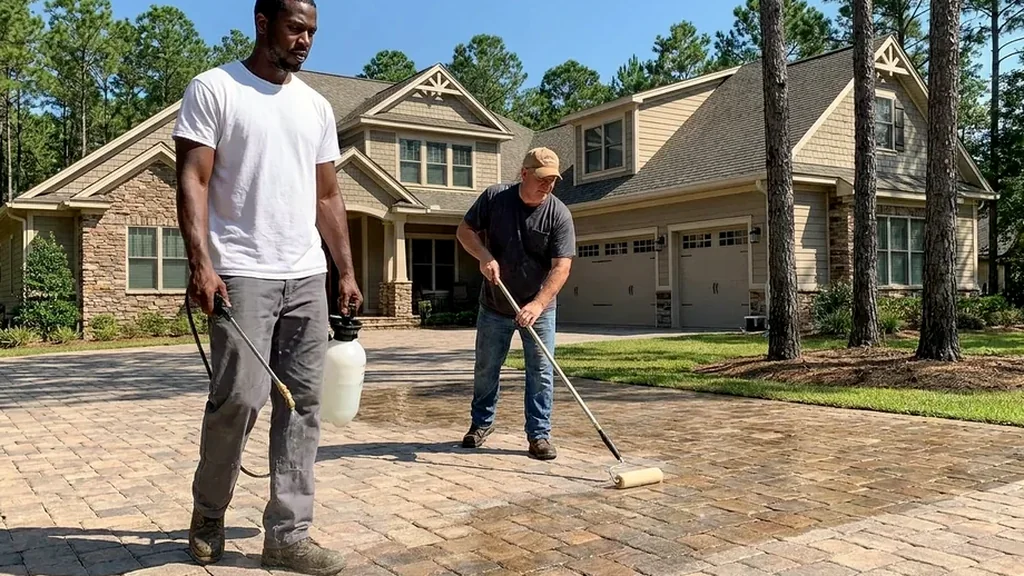
How does a paver sealing job work in San Marco?
Look at the surface and the water line
The contractor checks how water leaves your pavers, whether silt from past high water is still there, and what kind of paver you have. Brick and concrete get different treatment. Any sunken spots are marked for repair, because sealing over a dip only preserves it. The visit also settles which sealer is already on the surface, since a water-based sealer cannot go over a solvent-based one. Bring up any past flooding on your lot.
Wash away silt, algae and stains
The wash clears silt, green film and oil from the surface. Rust and other stains get their own treatment at this stage. Water is kept off house walls, stucco and fresh landscaping near the pavers. Washing pulls out joint sand, so that gets replaced later. Near the river, the rinse water is directed away from the street when it can be, so silt does not wash back toward the water.
Let the pavers dry all the way
A brick maker warns that sealant should never go over damp or dirty surfaces, because those conditions get locked in. Near the river, drying can take longer than on higher ground. Drying is judged by checking the pavers themselves, not by the calendar. Patience here is what prevents a cloudy finish. On a shaded San Marco walk, that can mean waiting through a damp morning.
Fill the joints and apply sealer
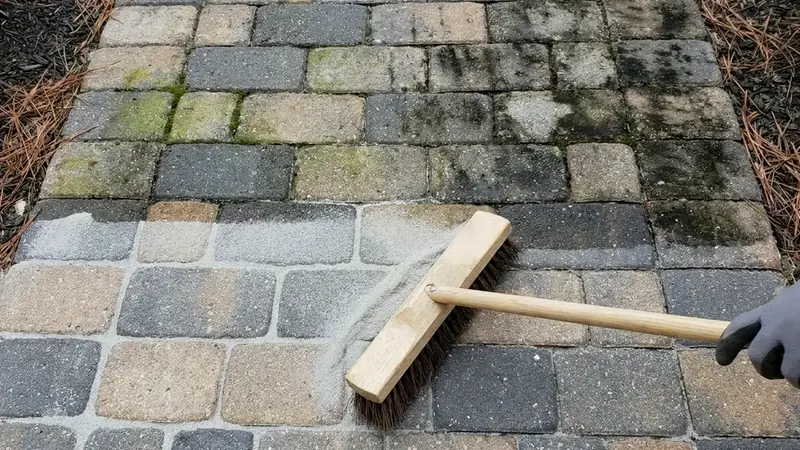
Fresh sand goes into the joints and is swept in tight. Then the sealer is sprayed and back-rolled to reach into the joints and stay even. Edges at the garage, walkways and steps get extra attention. One Jacksonville company says a white haze usually traces to damp pavers or too thick a coat. Thin coats are the safer way to go.
Cure and walk it with the contractor
Foot traffic is usually fine within a few hours, and cars stay off for about a day, depending on the product. The contractor walks the finished pavers with you and points out how to read the color when dry. A sealed surface should bead water. A Jacksonville company offers a simple test: beading water means the coat is working, and water that darkens the paver means it is spent. Check a few spots after the next rain.
Complete paver services in San Marco
Three stages make up the work. A deep wash clears silt, algae and stains, then the joints get fresh sand, and last the sealer goes on in thin coats. In San Marco each stage is timed around the tide and the forecast. To plan yours, book your free estimate.
Brick, clay and concrete pavers drink sealer differently. Concrete pavers and old brick are not the same, since brick and natural stone are more porous and need different sealer choices. Walkways in shade stay damp longer than drives in sun. Show the contractor each surface when you call (904) 966-4279.
Choosing a finish is a matter of taste and upkeep. Matte keeps the natural color, and a wet look deepens it but shows scuffs sooner. Water-based sealer cannot be applied over solvent-based sealer, so the old coat is identified first. If you have a favorite look, book your free estimate and ask to see a sample.
Timing follows the weather and the water. Rain in Jacksonville falls mostly from May to September, and November through April is the driest stretch. Pavers must be dry before sealing, and one Jacksonville page puts that at 24 to 48 hours after cleaning, so a soaking storm or high tide can move the date. Call (904) 966-4279 to ask about open dates.
Questions to ask before you hire
- Does the price include the pressure washing, or is that a separate line?
- How do you check that the pavers are dry before the sealer goes on?
- Will the sealed pool deck be slippery when wet, and is there a grip additive?
- What do you do about pavers that have sunk or shifted along the edges?
- Do you replace joint sand that has washed out, or only add a little on the surface?
- Will the sealer leave a glossy wet look or a natural matte one, and can I see a sample first?
- What happens if a summer storm rolls in halfway through the job?
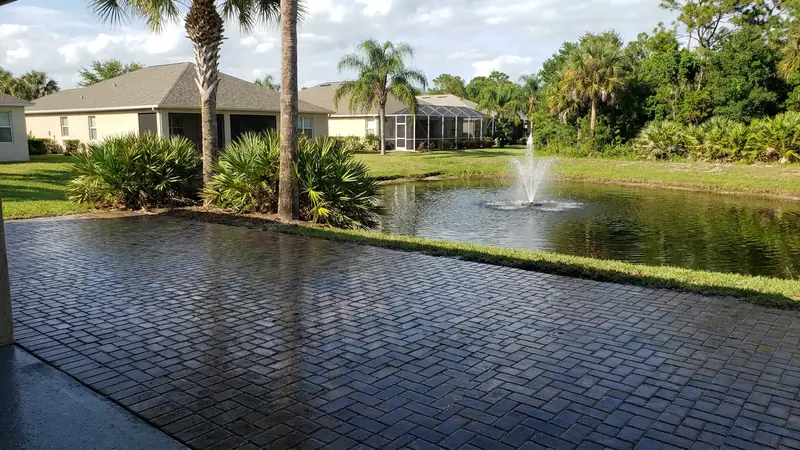
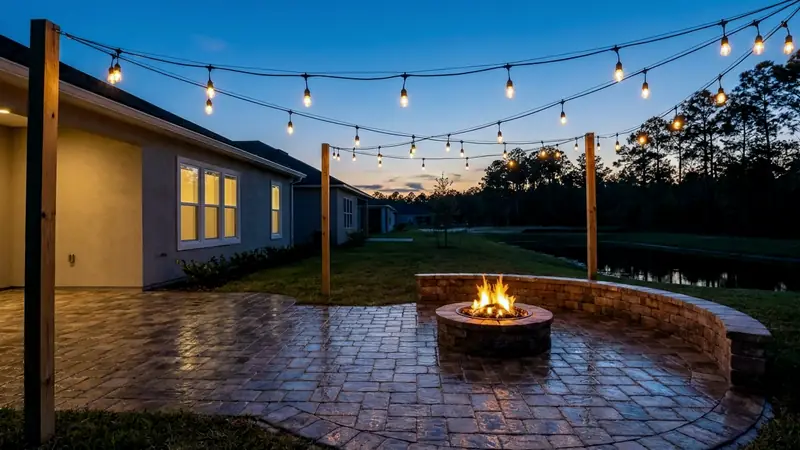
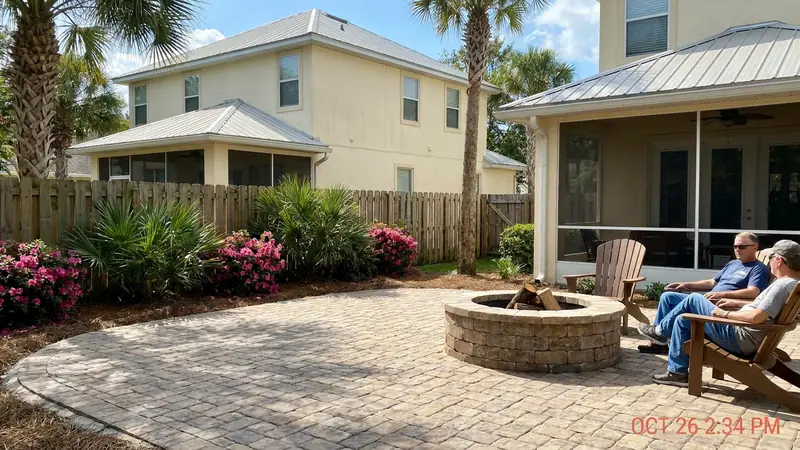
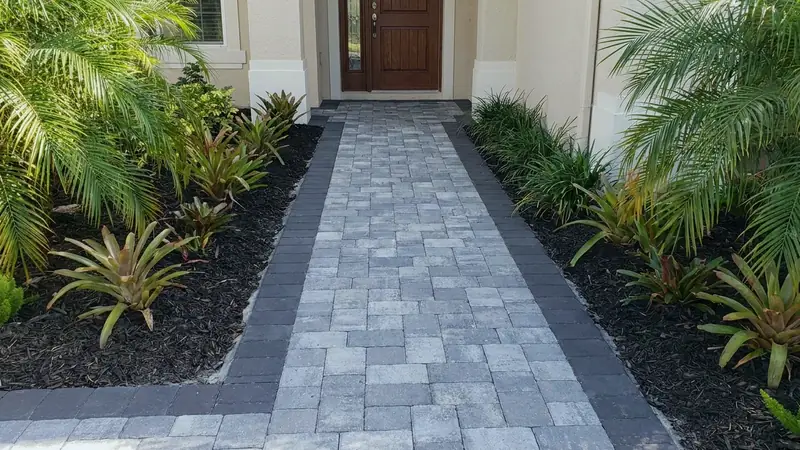
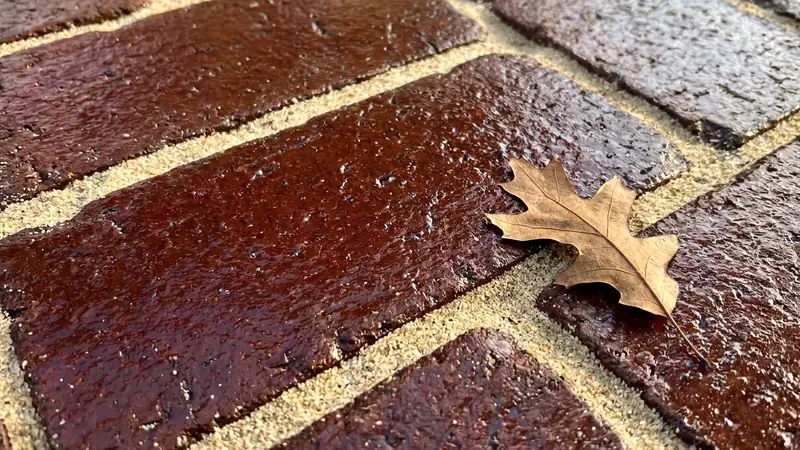
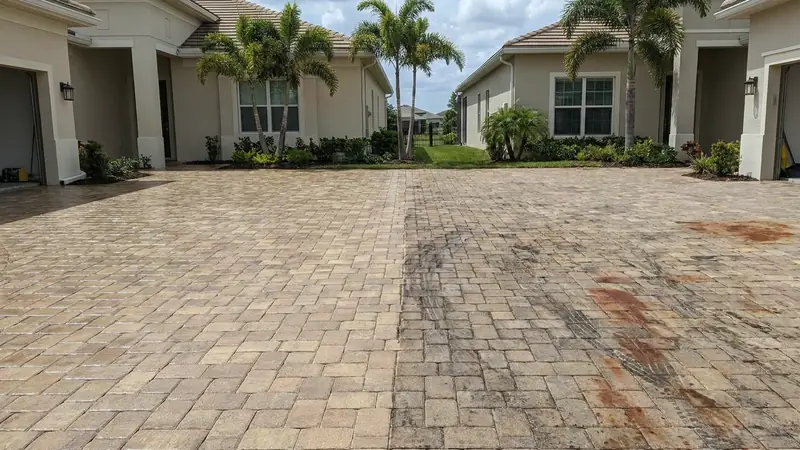
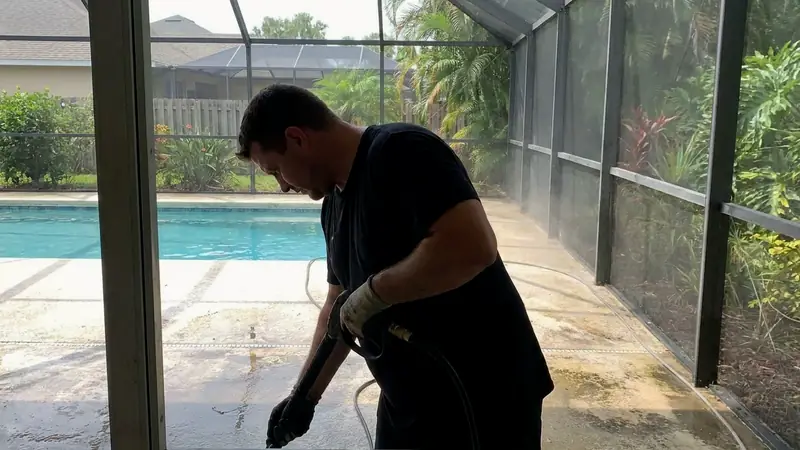
What do sealed pavers look like around San Marco?
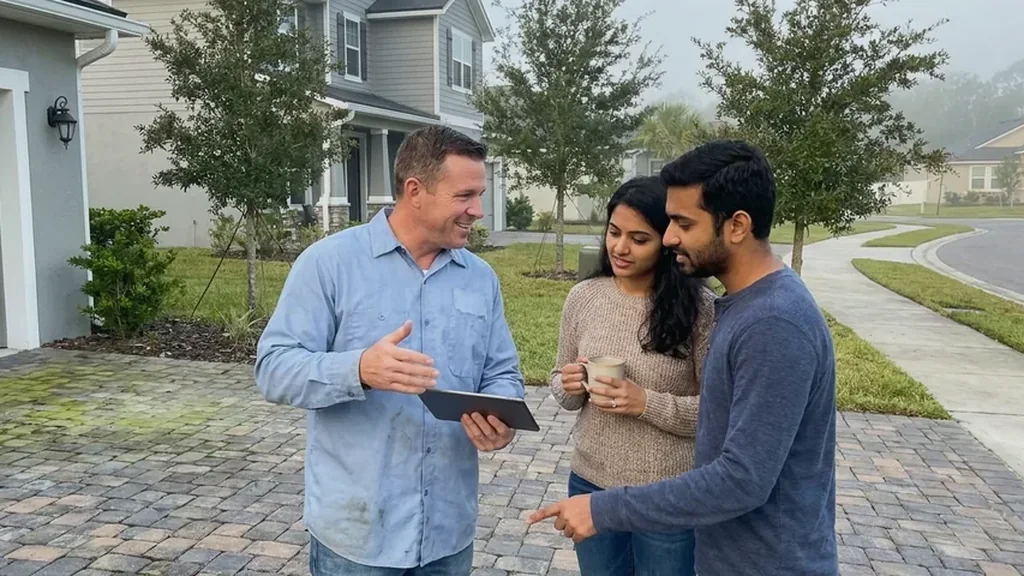
Why local matters in San Marco
San Marco sits close to the river, so the water table and tide matter more here than on higher ground. A contractor who works in the area learns which blocks take on water and how long they take to dry. That knowledge can save you a failed coat, and it shapes the order of the day. To talk through your block, book your free estimate.
Many San Marco homes and courtyards use brick or clay pavers that are older than the usual concrete type. Local contractors see these surfaces often and know when a breathable sealer is the safer pick. Ask about that when you call (904) 966-4279, and ask what product is on your pavers now.
The Square, Hendricks Avenue and the older streets leave little room for equipment. A local contractor settles parking, hose runs and access ahead of time. That helps your neighbors and keeps the job tidy. The estimate is free, and you can book your free estimate whenever you are ready.
Is it worth hiring someone who knows San Marco's history?
Yes, because the way San Marco was built explains what sits under your feet. The area was sold in a land rush in September 1925, and San Marco Square was laid out by late 1926 with the Piazza San Marco in Venice as its model. The San Marco Preservation Society formed in 1975 to protect that character. Near the Square, call (904) 966-4279.
The Treaty Oak in its seven-acre park off Prudential Drive is put at around 250 years old. Theatre Jacksonville's building on San Marco Boulevard joined the National Register in 1991, and the San Marco Theatre opened in 1938. Marco Lake, the old brick pit, ties the area back to the river. If you live near any of these San Marco landmarks, book your free estimate.
Frequently Asked Questions
Is it good to seal pavers in San Marco?
Yes, in most cases. Sealer protects the surface from dirt, oil and fading, and it holds joint sand in place. San Marco's humidity, river water and shade make that protection worth having. Sealing also makes the next cleaning easier, since dirt sits on top instead of soaking in.
Can a contractor clean, sand and seal my San Marco pavers in one visit?
Often, yes, but the schedule depends on the surface. One Jacksonville company says its job takes two days, with about 24 hours of drying. Ask the contractor how many visits yours will need, and how long to stay off the surface afterward.
Why is paver sealing so expensive in San Marco?
Most of the work is prep. Cleaning, drying and refilling the joints take more time than rolling on the sealer. Old brick, river silt and small courtyards can raise the price per square foot. A company that spends 2 to 3 hours of prep for each hour of sealing, as one Jacksonville firm says it does, will charge for that time.
How much does it cost to have pavers cleaned and sealed in San Marco?
In San Marco, plan on the published $1.75 to $3.25 per square foot for a complete clean, sand and seal. A San Marco job may land high in that range if old film must be stripped. Get the square footage in writing, since it lets you check the total.
Is it better to spray or roll paver sealer in San Marco?
Professionals commonly do both. One Jacksonville company says they spray the sealer and then back-roll it, so it reaches into the joints and lies evenly. Ask the contractor to describe the method before work begins, and which sealer will be used on your type of paver.
What sealer works on old brick pavers in San Marco?
Old clay brick often does better with a breathable penetrating sealer. A Northeast Florida paver company says a film sealer can trap moisture and cause flaking and haze. A test spot lets you see the color change first, and it costs far less than redoing a whole courtyard.
Do I need city approval to seal pavers in San Marco?
Only if your address is in a local historic district or is a landmark. Then the city requires a Certificate of Appropriateness for exterior work, and it lists driveways as an example. Check your lot on the Land Development Map.
Can sealing be done after the river floods my San Marco yard?
Yes, once the pavers have been washed and are bone dry. Silt left by high water has to be washed off first, and lost joint sand replaced. A brick manufacturer warns that sealant should never go over damp or dirty surfaces.
Nearby areas we serve
Ready for a Free Estimate in San Marco?
Call (904) 966-4279 and tell us about your pavers.
Free, no obligation